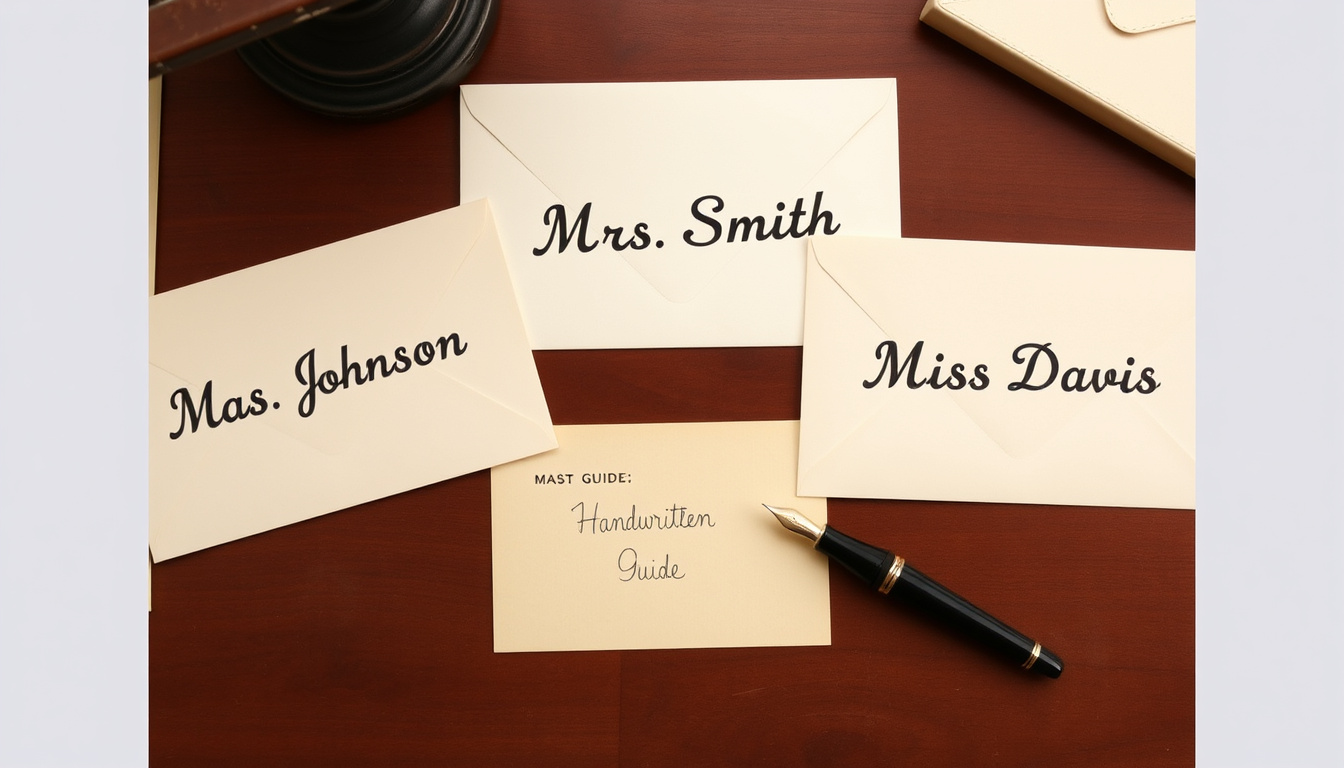
You’ve probably seen “Ms.” on a form and wondered what it really stands for. The title has quietly become the default for women in professional life, but the choice between Ms., Mrs., and Miss still trips up plenty of people. This quick guide lays out the definitions, usage rules, and history behind each title—so you can pick the right one without overthinking it.
First recorded use: 1901 ·
Popularized: 1970s ·
Current style guide adoption: AP Stylebook, Chicago Manual of Style ·
Pronunciation: /mɪz/
Quick snapshot
- Ms. does not indicate marital status (Merriam-Webster (authoritative dictionary))
- Pronunciation is /mɪz/ (Merriam-Webster)
- First recorded use in 1901 (Emily Post Institute (etiquette authority))
- Whether Ms. should include a period (American vs British usage) (Grammarly (writing assistant platform))
- Whether Ms. is acceptable for all ages (some still prefer Miss for young girls) (Emily Post Institute)
- 1901: First recorded use of Ms. in print (Emily Post Institute)
- 1970s: Feminist movement promotes Ms. as neutral title (Merriam-Webster)
- 1980s: AP Stylebook accepts Ms. (Scribbr (academic editing service))
- Mx. emerges as gender-neutral alternative (Merriam-Webster)
- Ms. remains default in professional correspondence (Grammarly)
The table below shows five key facts about Ms., arranged from oldest known use to modern recommendation.
| Fact | Detail |
|---|---|
| First known use | 1901 |
| Pronunciation | /mɪz/ |
| Associated with | Feminist movement in 1970s |
| Used in | Formal and professional writing |
| Preferred by | Many women who prefer not to disclose marital status |
What is MS & Mrs?
Definitions of Ms., Mrs., and Miss
- Ms. is a courtesy title that does not indicate marital status and is used for adult women (Merriam-Webster (authoritative dictionary)).
- Mrs. is a courtesy title traditionally used for a married woman (Merriam-Webster).
- Miss is a courtesy title used for a girl or an unmarried woman (Merriam-Webster).
Ms. is the female equivalent of Mr. — it works for any woman, married or not, and is the default in most style guides. Mrs. historically derives from “Mistress” and signals a married woman. Miss, also from “Mistress,” is reserved for unmarried women and girls.
Ms. gives women the same ambiguity that Mr. gives men: no one asks a man his marital status when addressing him. This neutrality is why Ms. overtook Miss in professional use.
Pronunciation guide for Ms., Mrs., and Miss
- Ms. = /mɪz/ (rhymes with “fizz”)
- Mrs. = /ˈmɪsɪz/ (rhymes with “business”)
- Miss = /mɪs/ (rhymes with “kiss”)
All three are pronounced with a soft “z” or “s” sound. The key distinction is the vowel length.
The implication: pronunciation alone rarely causes confusion, but spelling matters — Ms. without a period (British) vs. with a period (American) still trips up international correspondence.
Should I use MS or Miss?
When to use Ms. vs. Miss
- Use Ms. when marital status is unknown, irrelevant, or when the woman prefers it (Emily Post Institute (etiquette authority)).
- Use Miss for young girls (under 18) or for an unmarried woman who specifically prefers it (Emily Post Institute).
- Ms. is the safest choice when addressing a woman you don’t know (Minted (stationery and wedding brand)).
Formal vs. informal contexts
- Formal writing (letters, invitations, professional emails): Ms. is standard for adult women.
- Informal settings: use the title the woman introduces herself with.
What this means: Ms. has become the professional default, but Miss isn’t dead — it still carries a youthful, traditional connotation that some women prefer.
What is MS for a woman?
What does Ms. mean for a woman?
Ms. is a title that simply marks the bearer as an adult woman, with no comment on marriage. It was actively championed by the feminist movement in the 1970s as a way to give women a marital-status-neutral option, just as Mr. has always been for men (Merriam-Webster).
Ms. as a neutral title
- Ms. does not indicate marital status (Scribbr (academic editing service)).
- It is used by women of any age, from young professionals to widows.
- Most major style guides (AP, Chicago, MLA) recommend Ms. as the default for women.
The pattern: Ms. is the only title that separates a woman’s professional identity from her personal life. The trade-off is that some traditional settings (e.g., wedding invitations) still expect Mrs. or Miss.
When you use Miss for an older unmarried woman, you risk infantilizing her. When you use Mrs. for a married woman who doesn’t take her husband’s name, you risk misnaming her. Ms. avoids both traps.
Is Ms or Mrs married?
Married vs. unmarried titles
- Mrs. is traditionally used by married women (Merriam-Webster (authoritative dictionary)).
- Miss is traditionally used by unmarried women (Merriam-Webster).
- Ms. can be used by married women who prefer not to disclose their status (Emily Post Institute (etiquette authority)).
Can a married woman use Ms.?
Yes. Many married women choose Ms. precisely because it doesn’t broadcast “married.” The Knot notes that Ms. is a neutral alternative that works for any woman, regardless of marital history (The Knot (wedding planning resource)).
The catch: some older etiquette guides still insist that married women should be Mrs., but modern usage has largely moved past that rule.
Is Ms still used today?
Is Ms. outdated?
No — Ms. remains widely used. It gained mainstream popularity in the 1970s and has only solidified since. The Emily Post Institute calls Ms. “the adult title for women” (Emily Post Institute).
Ms. in modern usage
- Still widely used in professional correspondence (Grammarly (writing assistant platform)).
- Recommended by AP Stylebook, Chicago Manual of Style, and many academic style guides.
- The rise of Mx. as a gender-neutral alternative does not threaten Ms. — they occupy different spaces.
The trade-off: Ms. is sometimes confused with the medical abbreviation for multiple sclerosis (MS). In written contexts, the period helps distinguish it, but in speech the risk is low because context clarifies.
Ms. vs Mrs. vs Miss: Comparison Table
Three titles, one key difference: marital status signaling. Here’s how they stack up across the most common usage dimensions.
The comparison table below shows how each title differs on pronunciation, marital status, use case, and example.
| Title | Pronunciation | Marital Status | When to Use | Example |
|---|---|---|---|---|
| Ms. | /mɪz/ | Neutral | Adult women, unknown or irrelevant status | Ms. Johnson |
| Mrs. | /ˈmɪsɪz/ | Married | Married women (traditional) | Mrs. Johnson |
| Miss | /mɪs/ | Unmarried | Girls, young unmarried women | Miss Johnson |
The pattern is simple: only Ms. sidesteps marital status entirely. That’s why it’s the go-to for any scenario where the woman’s personal life is none of your business.
Pros and Cons of Using Ms.
Upsides
- Neutral – no marital assumption
- Professional – standard in business correspondence
- Safe – works when you don’t know the woman’s preference
- Modern – aligns with feminist and inclusive values
Downsides
- Ambiguous – some traditionalists see it as indecisive
- Medical confusion – abbreviation overlaps with multiple sclerosis
- Pronunciation – /mɪz/ can sound like “miz” and be misheard
- Still not universal – some older etiquette guides still prefer Mrs. or Miss
Timeline: The Rise of Ms.
- 1901 – First recorded use of Ms. in print (Emily Post Institute).
- 1970s – Feminist movement promotes Ms. as a neutral title (Merriam-Webster).
- 1980s – AP Stylebook accepts Ms. as standard (Scribbr).
- 2000s – Mx. emerges as a gender-neutral alternative (Merriam-Webster).
What this means: Ms. took decades to become mainstream, but once it hit the style guides, it never looked back. The latest entry, Mx., shows the same pattern of language adapting to social change.
Clarity: What We Know vs. What’s Fuzzy
Confirmed facts
- Ms. does not indicate marital status (Merriam-Webster).
- Pronunciation is /mɪz/ (Merriam-Webster).
- First recorded use in 1901 (Emily Post Institute).
What remains unclear
- Whether Ms. should include a period (American vs British usage).
- Whether Ms. is acceptable for all ages (some still prefer Miss for young girls).
Expert Perspectives
Use Ms. unless a woman requests otherwise.
— AP Stylebook (2024), AP Stylebook (journalism style guide)
Ms. is a title used before a woman’s name or surname regardless of marital status.
— Merriam-Webster, Merriam-Webster (authoritative dictionary)
Ms. is the adult title for women and came into being in the 1970s.
— Emily Post Institute, Emily Post Institute (etiquette authority)
Ms. is a neutral option that can be used for any adult woman.
— Scribbr, Scribbr (academic editing service)
Summary
The choice between Ms., Mrs., and Miss comes down to one thing: how much you want a woman’s marital status to define how she’s addressed. Ms. offers a way out of that binary, and it’s been adopted by nearly every major style guide as the safe default. For professionals, the implication is clear: use Ms. unless you know the woman prefers Mrs. or Miss — otherwise you risk making an assumption that’s none of your business.
For a more detailed breakdown of how to choose between Mr., Mrs., and Ms. in different contexts, see this Mr., Mrs., and Ms. titles guide.
Frequently asked questions
Is Ms. professional?
Yes. Ms. is the standard professional title for women in most English-speaking workplaces. It’s recommended by style guides like the AP Stylebook and Chicago Manual of Style.
Can I use Ms. for a widow?
Absolutely. Many widows prefer Ms. because it separates their identity from their late husband’s. Mrs. is also common, but Ms. is respectful and neutral.
Do I have to use Ms. if I don’t know marital status?
No one is required to use any particular title, but etiquette experts recommend Ms. as the safest choice when marital status is unknown. It avoids the risk of using Miss for an older woman or Mrs. for a woman who doesn’t use it.
Is Miss offensive?
Not inherently, but it can be perceived as dismissive or infantilizing if used for an adult woman. The Emily Post Institute says Miss is appropriate for girls under 18.
Should I use Ms. in email signatures?
If you’re a woman and you prefer to keep your marital status private, Ms. is a great option for your email signature. Many professionals use it as a neutral courtesy title.
What does Ms. stand for?
Ms. is not an abbreviation of any single word. It was deliberately created in the 20th century as a female counterpart to Mr., combining the “M” from Miss/Mrs. with the “s” to avoid indicating marital status.
Why is Ms. pronounced ‘miz’?
The pronunciation /mɪz/ distinguishes Ms. from Miss (/mɪs/) in speech, matching the written form. It’s been the standard pronunciation since the 1970s.

Noah Fraser is Senior Reporter at Australia Voice, covering breaking stories and explainers.