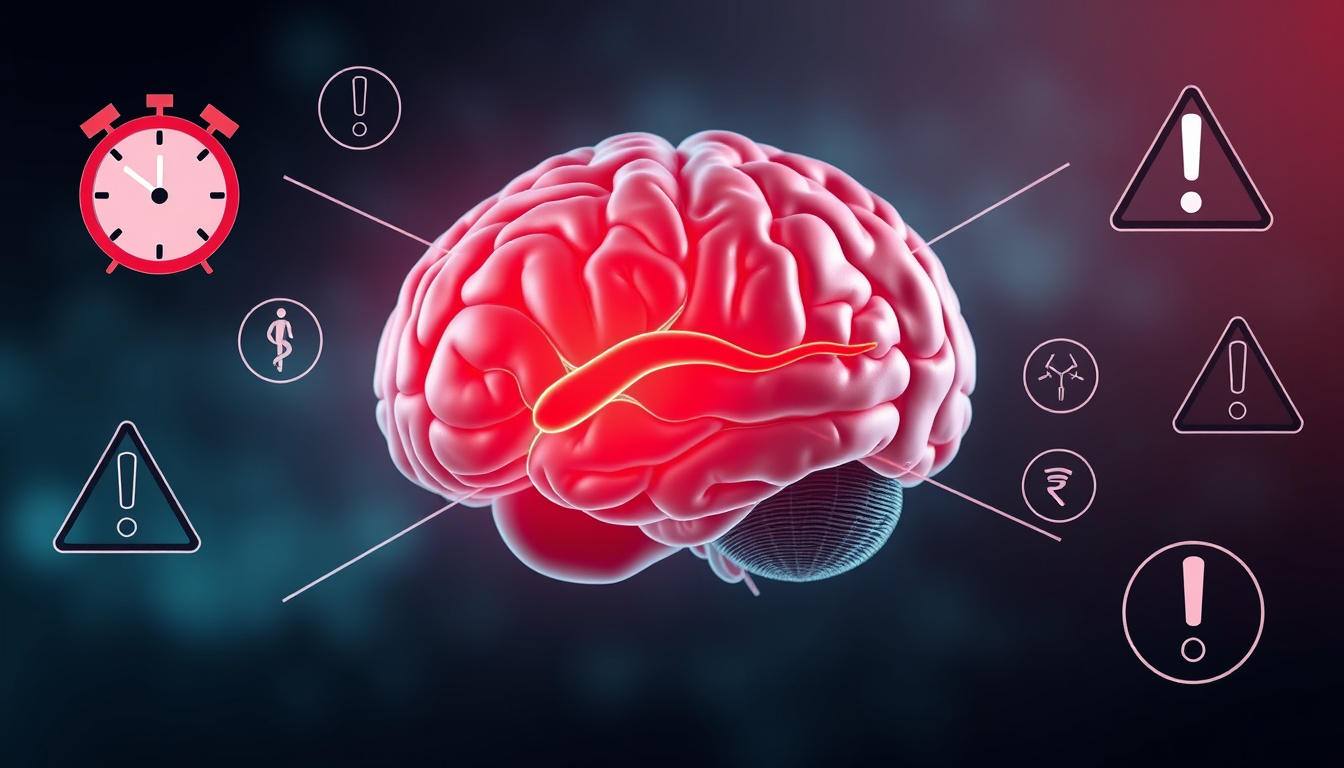
Few medical emergencies strike as suddenly or with as much force as a stroke. In the United States alone, someone has a stroke every 40 seconds, making it one of the leading causes of death and serious disability. The term “brain attack” that doctors sometimes use captures its sudden, devastating nature: blood flow to part of the brain is cut off or a vessel bursts, and brain tissue starts dying within minutes. Understanding what a stroke is — and knowing its warning signs — can quite literally mean the difference between recovery and permanent damage.
Definition: Blood supply to brain cut off · Primary Types: Ischemic and hemorrhagic · Emergency Status: Life-threatening · Common Cause: Blocked vessel or rupture
Quick snapshot
- Stroke cuts blood supply to brain (HSE.ie)
- Ischemic stroke from blockage accounts for 87% of cases (Johns Hopkins Medicine)
- Life-threatening medical emergency requiring immediate care (American Stroke Association)
- Thrombotic stroke onset: sudden during sleep or gradually over hours/days (Johns Hopkins Medicine)
- TIA symptoms: few minutes up to 24 hours before full stroke may occur (Johns Hopkins Medicine)
| Field | Value |
|---|---|
| Medical Term | Brain attack |
| Onset Trigger | Blocked or burst vessel |
| Affected Area | Brain tissue oxygen deprivation |
| Status | Life-threatening emergency |
| Sources | HSE.ie, Mayo Clinic, Johns Hopkins Medicine |
What is the cause of a stroke?
A stroke happens when blood flow to part of the brain is interrupted or when a blood vessel ruptures and bleeds into the brain. Without oxygen-rich blood, brain cells begin to die within minutes, making every second critical. The two primary mechanisms are blockage and rupture — each driven by distinct underlying causes.
Blocked blood flow
The majority of strokes — about 87% — are ischemic, meaning a clot or fatty deposit blocks an artery supplying blood to the brain (Johns Hopkins Medicine). Ischemic strokes split into two subtypes: thrombotic strokes develop when a clot forms directly inside a brain artery, often in people with atherosclerosis, while embolic strokes occur when a clot forms elsewhere — usually in the heart — and travels to the brain. Roughly 15% of embolic strokes link to atrial fibrillation, an irregular heartbeat that allows blood to pool and clot (Johns Hopkins Medicine). Risk factors for blockage include high blood pressure, diabetes, high cholesterol, heart disease, and smoking (Spring Valley Hospital).
Ruptured vessel
Hemorrhagic strokes account for roughly 13% of cases but carry higher mortality (Johns Hopkins Medicine). These occur when a weakened blood vessel bursts — often due to aneurysms, extremely high blood pressure, trauma, or a condition called amyloid angiopathy where protein deposits weaken vessel walls (Mayo Clinic). The two main subtypes are intracerebral hemorrhage, where bleeding occurs directly into brain tissue, and subarachnoid hemorrhage, where blood pools between the brain and skull. Anticoagulant medications, when overused, can also cause hemorrhagic stroke.
Risk factors by gender
While men face higher overall stroke risk at younger ages, women experience unique symptom patterns. Women-specific symptoms include nausea, chest pain, hiccups, shortness of breath, sudden fatigue, and jaw pain — symptoms that can delay recognition because they don’t fit the classic picture (SAMC). Pregnancy, birth control pills, and hormone replacement therapy add stroke risk for women.
What are the 5 warning signs of a stroke?
Recognizing stroke symptoms immediately is crucial — brain tissue dies faster than almost any other part of the body. Medical organizations have developed simple mnemonics to help both bystanders and patients identify stroke FAST. The American Stroke Association’s BE FAST extends the classic test with two additional checks.
Immediate symptoms
The FAST test checks four signs: Face drooping (one side of the face may sag or feel numb), Arm weakness (one arm becomes weak or numb; ask the person to raise both arms and watch if one drifts downward), Speech difficulty (words may be slurred, confused, or the person cannot speak at all), and Time to call 911 (every minute counts — call emergency services immediately) (American Stroke Association). Common symptoms also include sudden confusion, trouble seeing in one or both eyes, loss of balance or coordination, and a severe headache with no known cause (Spring Valley Hospital).
BE FAST additions
BE FAST adds Balance (sudden dizziness, loss of balance, or difficulty walking) and Eyes (sudden trouble seeing in one or both eyes, including double vision) to the original checklist (American Stroke Association). Posterior circulation strokes — those affecting the back of the brain — frequently present with vertigo, imbalance, slurred speech, double vision, and nausea rather than the classic one-sided weakness.
How it feels at start
Patients often describe stroke onset as sudden and profoundly disorienting. One side of the body may feel “heavy” or numb, words may refuse to come out despite knowing what you want to say, vision may blur or double, and a sudden severe headache — sometimes described as the worst headache of one’s life — can strike without warning. The experience varies by stroke location but almost always feels “wrong” in a way that prompts most people to seek help.
What exactly happens during a stroke?
When a stroke occurs, the interruption of blood flow triggers a cascade: neurons are deprived of oxygen, cellular waste builds up, and affected brain tissue begins to die. The speed and extent of damage depend on stroke type, size, and location in the brain.
Brain tissue impact
Brain cells demand a constant supply of oxygen and glucose carried by blood. When that supply stops, cells can survive only a few minutes before irreversible damage begins. The area of dead tissue is called an infarct, and surrounding tissue at risk — the “penumbra” — may be salvageable if blood flow is restored quickly (Cleveland Clinic). This is why stroke is called a “brain attack” — like a heart attack, it requires emergency intervention within a narrow time window.
Types involved
The CDC recognizes two main stroke types: ischemic (caused by blockage) and hemorrhagic (caused by bleeding), plus transient ischemic attacks (TIAs), sometimes called “mini-strokes” (CDC). TIAs produce stroke-like symptoms but resolve within minutes to 24 hours, leaving no permanent damage — but they serve as critical warnings that a full stroke may follow. Thrombotic strokes may develop gradually over hours or even days, sometimes preceded by TIAs, while embolic strokes typically strike suddenly with no warning (Johns Hopkins Medicine). Five common stroke types overall include ischemic, hemorrhagic, TIA, cryptogenic (unknown cause), and brainstem stroke (Brigham and Women’s Hospital).
Survival factors
Stroke survival depends heavily on how quickly treatment begins. Roughly 1.9 million neurons die each minute during an untreated ischemic stroke. Brainstem strokes, while rare, can affect basic life functions like breathing and heart rate due to the brainstem’s small but critical size. The National Institute on Aging notes that ischemic stroke is the most common type, caused by clots or vessel narrowing (NIA). Long-term outcomes vary widely based on stroke severity, location, and rehabilitation quality.
How serious is having a stroke?
A stroke ranks among the most catastrophic medical events a person can survive. It is a leading cause of long-term disability and the fifth leading cause of death in the United States. The life you knew before a stroke may not be the life you return to — making prevention and rapid response paramount.
Long-term survival
Stroke survival rates have improved over decades due to better emergency care, but outcomes remain highly variable. Survivors may face paralysis on one side, speech and language difficulties (aphasia), memory problems, and emotional challenges including depression and anxiety. Rehabilitation can retrain the brain to regain some function, but recovery typically takes months to years and may be incomplete. The CDC reports that prompt treatment with clot-busting drugs within 4.5 hours (or mechanical thrombectomy within 24 hours for eligible patients) significantly improves outcomes (CDC).
Severity levels
Not all strokes are equally devastating. Minor strokes may cause brief symptoms with minimal long-term effects, while massive hemorrhagic strokes — especially in critical brain regions — can cause immediate coma or death. The location within the brain determines which functions are affected: left-side strokes typically impair speech and right-side motor control, while right-side strokes affect left-body movement and spatial awareness. Brainstem strokes, though uncommon, often prove most dangerous because they control breathing and heart rhythm.
Recovery outlook
Recovery depends on stroke severity, age, overall health, and rehabilitation intensity. The brain can sometimes reroute functions around damaged areas through neuroplasticity, but this requires intensive therapy. Roughly 10% of stroke survivors recover completely; 25% recover with minor impairments; 40% require some level of care; and 10% need permanent nursing care (Cleveland Clinic). Post-stroke depression affects roughly one-third of survivors and requires treatment in its own right.
How do I avoid getting a stroke?
The good news: up to 80% of strokes are preventable through lifestyle changes and medical management of risk factors. Prevention works — and the steps needed are largely in your control. The key is attacking risk factors before they cause damage.
Prevention steps
Blood pressure control is the single most important stroke prevention measure. High blood pressure damages artery walls, making them susceptible to blockage and rupture. Target blood pressure below 130/80 mmHg for most adults (SAMC). Other critical steps include managing cholesterol and LDL levels, controlling blood sugar if you have diabetes, and taking anticoagulants exactly as prescribed if your doctor has prescribed them for atrial fibrillation.
Lifestyle changes
The lifestyle factors most within your control include smoking cessation (nicotine damages blood vessels and promotes clotting), limiting alcohol to moderate levels (excessive drinking raises blood pressure), maintaining regular physical activity (at least 150 minutes weekly of moderate exercise), and eating a diet rich in fruits, vegetables, whole grains, and lean protein while reducing sodium and saturated fats (Medical News Today). Obesity increases stroke risk substantially — losing even 5-10% of body weight can meaningfully reduce risk.
Risk reduction
Non-modifiable risk factors include age (risk doubles each decade after 55), race (African-American and Hispanic individuals face higher risk), gender, and family history. But modifiable risks — hypertension, tobacco use, diabetes, high cholesterol, inactivity, poor diet, illicit drug use, heavy alcohol consumption, and atrial fibrillation — account for the majority of stroke cases (UTHealth). High blood pressure remains the leading cause of stroke, but it is also the most treatable cause — making routine blood pressure monitoring non-negotiable for anyone over 40 or with family history.
Stroke symptoms: BE FAST and what to watch for
Knowing the warning signs of stroke — and acting immediately when they appear — can save brain function or even a life. The BE FAST checklist, endorsed by the American Stroke Association, gives anyone the power to recognize stroke in seconds. For more information on stroke, check out this clear iPhone cache.
- Balance: Sudden loss of balance, coordination, or dizziness
- Eyes: Sudden vision changes — double vision, blindness in one eye, or loss of peripheral vision
- Face: One side of the face drooping or numb; smile appears uneven
- Arm: Weakness or numbness in one arm or leg; inability to raise both arms evenly
- Speech: Slurred speech, difficulty finding words, or inability to repeat a simple sentence
- Time: Call 911 immediately if any sign is present — every minute, roughly 1.9 million neurons die
BE FAST takes under a minute to check. If you notice even one symptom in yourself or someone else, call 911 before doing anything else. Driving to the hospital wastes critical time — ambulance crews begin treatment upon arrival and alert the stroke team before reaching the door.
Hemorrhagic strokes (13% of cases) cannot be treated with clot-busting drugs — giving them mistakenly could worsen bleeding. Only emergency room imaging can determine stroke type, which is why calling 911 is essential rather than attempting to drive to a hospital yourself.
Confirmed facts
- Stroke cuts blood supply to brain — life-threatening (HSE.ie)
- Ischemic from blockage: 87% of strokes (Johns Hopkins Medicine)
- Hemorrhagic from rupture: 13% of strokes (Johns Hopkins Medicine)
- High blood pressure is the leading cause of stroke (SAMC)
- TIAs last minutes to 24 hours, serve as warnings (Johns Hopkins Medicine)
- BE FAST expands FAST with Balance and Eyes checks (American Stroke Association)
- 80% of strokes are preventable with risk factor management (CDC)
What’s unclear
- Exact survival time varies by stroke type, location, patient age, and treatment speed — no universal number applies
- Cryptogenic strokes (unknown cause) appear more common in African-American and Hispanic populations, but regional data remains limited (EER24)
Expert perspectives on stroke
“A stroke is a life-threatening medical condition. It happens when the blood supply to part of the brain is cut off.”
— HSE.ie (Irish Health Service Executive)
“An ischemic stroke occurs when the blood supply to part of the brain is blocked or reduced. This prevents brain tissue from getting oxygen and nutrients. Brain cells begin to die within minutes.”
— Mayo Clinic (Leading Medical Institution)
“Stroke is a medical emergency that happens when something prevents your brain from getting enough blood flow. Without oxygen-rich blood, brain tissue dies.”
— Cleveland Clinic (Major Academic Medical Center)
Stroke treatment faces a cruel time constraint: clot-busting drugs work only within 4.5 hours of symptom onset, and mechanical thrombectomy within 24 hours. The earlier a patient reaches a stroke center, the more brain tissue can be saved. This is why BE FAST recognition at home is arguably the most consequential step in the entire stroke care chain.
For anyone at risk — and that includes adults over 55, people with family history, those with high blood pressure or diabetes — the choice is clear: know BE FAST, keep emergency numbers accessible, and treat any possible symptom as a real emergency until proved otherwise. Stroke does not negotiate on timing, and neither should you.
What are the types of stroke?
The five common stroke types are ischemic (clot blockage, 87% of cases), hemorrhagic (vessel rupture, 13% of cases), transient ischemic attack or TIA (brief “mini-stroke” symptoms lasting up to 24 hours), cryptogenic (unknown cause), and brainstem stroke (affecting basic life functions). Ischemic strokes split further into thrombotic (clot forms in brain artery) and embolic (clot travels from elsewhere, often the heart) (Brigham and Women’s Hospital).
What is ischemic stroke?
An ischemic stroke occurs when a clot or fatty deposit blocks an artery supplying blood to the brain, accounting for roughly 87% of all strokes (Johns Hopkins Medicine). Without oxygen-rich blood, brain cells in the affected area begin to die within minutes. Ischemic strokes are further divided into thrombotic (clot develops in a brain artery, often from atherosclerosis) and embolic (clot forms elsewhere — commonly in the heart due to atrial fibrillation — and travels to the brain) (Mayo Clinic).
What causes a stroke in a woman?
Women face the same stroke causes as men — primarily high blood pressure, atrial fibrillation, and atherosclerosis — but also encounter female-specific risk factors including pregnancy complications (preeclampsia), use of hormonal birth control, hormone replacement therapy during menopause, and higher stroke risk during the postpartum period. Women also experience unique stroke symptoms like nausea, chest pain, hiccups, shortness of breath, sudden fatigue, and jaw pain that can delay recognition (SAMC). Migraine with aura and autoimmune conditions more common in women also increase risk.
What causes a stroke in a man?
Men face higher stroke rates at younger ages than women, with primary causes including high blood pressure (the leading cause across all populations), atrial fibrillation, atherosclerosis from high cholesterol, diabetes, smoking, heavy alcohol consumption, and illicit drug use (particularly cocaine and amphetamines). Men also face elevated risk from obstructive sleep apnea, which is underdiagnosed and contributes to high blood pressure. Risk factors that are non-modifiable for men include age (doubling each decade after 55) and family history.
What are stroke symptoms?
Common stroke symptoms include sudden numbness or weakness on one side of the face, arm, or leg; sudden confusion or trouble understanding speech; sudden vision problems in one or both eyes; sudden trouble walking, dizziness, or loss of balance; and sudden severe headache with no known cause (Spring Valley Hospital). The BE FAST checklist — Balance, Eyes, Face, Arm, Speech, Time — provides a quick way to remember the warning signs (American Stroke Association). Women may additionally experience nausea, chest pain, hiccups, and sudden fatigue.
What is treatment for stroke?
Ischemic stroke treatment within 4.5 hours may include clot-busting medication (tPA) to dissolve the blockage. Eligible patients within 24 hours may undergo mechanical thrombectomy — a procedure to physically remove the clot using a stent retriever. Hemorrhagic stroke requires controlling bleeding, lowering intracranial pressure, and often surgical intervention to repair or relieve pressure on the brain. All stroke patients receive supportive care, continuous monitoring, and begin rehabilitation as soon as medically stable (CDC). Post-stroke, long-term treatment includes blood pressure management, antiplatelet therapy or anticoagulants, statins, and intensive physical, occupational, and speech therapy.
How does a stroke feel when it starts?
Stroke onset often feels profoundly wrong in a sudden, unmistakable way. One side of the body may feel heavy or numb; vision may blur, double, or darken; words may refuse to come out despite knowing what you want to say; the room may spin; or a sudden, severe headache — sometimes called “thunderclap” — can strike without warning. Posterior circulation strokes affecting the back of the brain frequently present with vertigo, imbalance, and double vision rather than the classic one-sided weakness. Most people sense something is seriously wrong and seek help, but some strokes (especially small ones) may go unnoticed.
What are the 10 signs before you have a stroke?
While strokes often strike without warning, TIAs (“mini-strokes”) can serve as precursor events. Warning signs that may precede a stroke include: (1) Sudden weakness or numbness in face, arm, or leg on one side; (2) Sudden confusion or trouble speaking; (3) Sudden vision changes in one or both eyes; (4) Sudden severe headache; (5) Sudden dizziness or loss of balance; (6) Sudden nausea or vomiting without other explanation; (7) Brief TIA episodes lasting seconds to 24 hours; (8) Unexplained fatigue, particularly in women; (9) Chest pain or shortness of breath, particularly in women; and (10) Hiccups that persist without other cause (Johns Hopkins Medicine). A TIA is a medical emergency even if symptoms resolve — roughly 10-15% of TIA patients experience a full stroke within three months.
Related reading: Voltaren Rapid 25: Uses, Dosage, Side Effects Guide · New Balance Running Shoes – Best Models for Every Runner
Ischemic and hemorrhagic strokes, key types covered in stroke causes symptoms types prevention, demand immediate action via BE FAST signs.
Thomas Walsh leads fact-checking, source verification and corrections at Australia Voice.