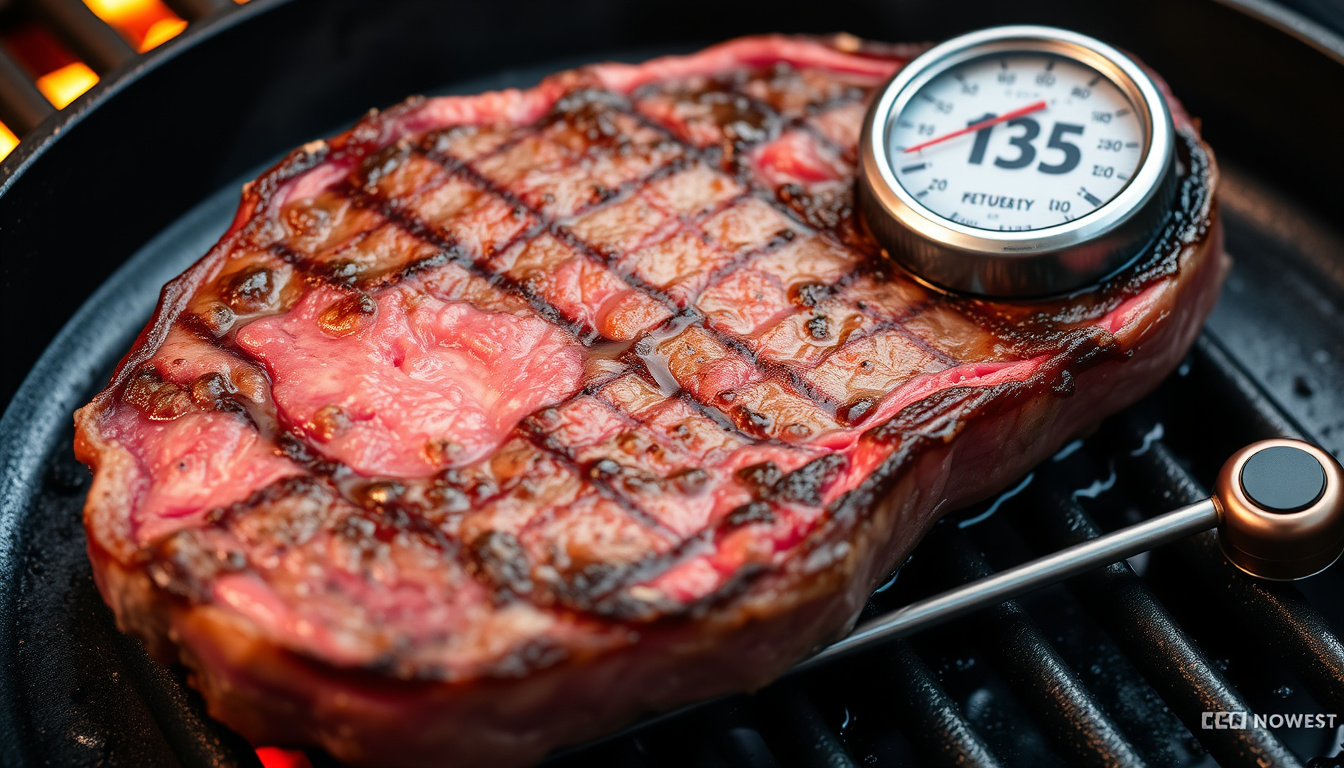
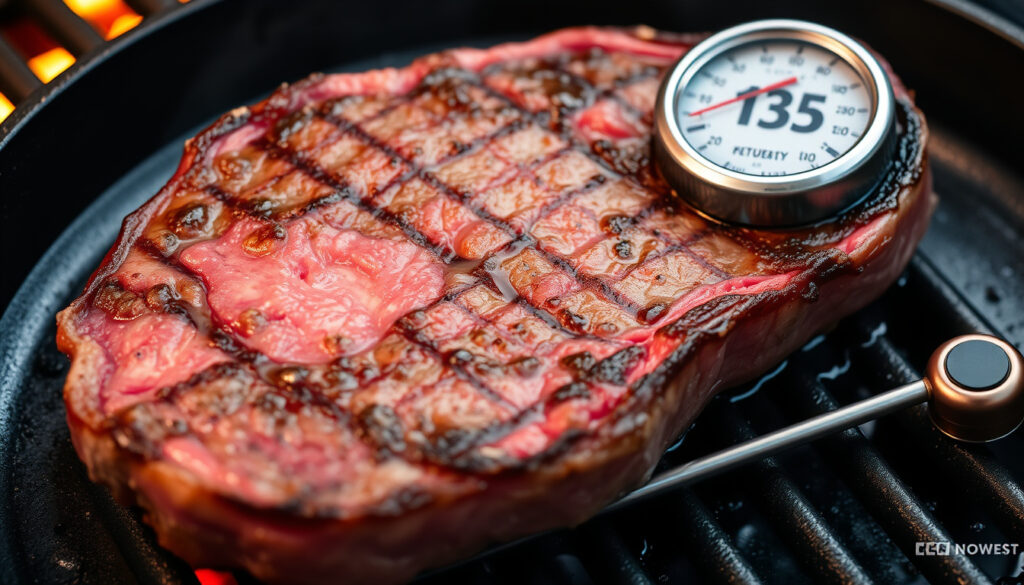
Medium rare steak represents the point where beef reaches its peak flavor and texture, combining a warm, rosy center with a properly seared exterior. This doneness level has become the preferred choice for steak enthusiasts and professional kitchens alike, offering a balance between tenderness and safety that other temperatures struggle to match.
Understanding what medium rare actually means requires knowledge of internal temperatures, cooking techniques, and visual indicators. Many home cooks struggle to consistently achieve this level of doneness, often relying on timing alone rather than understanding the underlying principles that determine when a steak has reached its ideal state.
What Temperature is Medium Rare Steak?
A medium rare steak reaches an internal temperature of 130–135°F (54–57°C), featuring a warm red center with pink edges and a seared crust. This combination delivers the most popular doneness level for achieving juicy, tender texture that steak lovers crave. The fat rendering at this temperature creates optimal mouthfeel without the dryness associated with higher doneness levels.
Skilled cooks remove steaks from heat at 125°F, allowing carryover cooking to bring them to the final 130–135°F range. This technique accounts for the temperature rise that occurs during resting, ensuring accurate results without overshooting the target.
Steak Doneness Overview
| Doneness Level | Internal Temp | Color | Texture |
|---|---|---|---|
| Rare | 120–125°F | Cool red center | Very soft, cool to touch |
| Medium Rare | 130–135°F | Warm red center | Juicy, slight resistance |
| Medium | 140–145°F | Pink throughout | Slightly firm |
| Medium Well | 150–155°F | Slight pink | Firm |
| Well Done | 160°F+ | No pink | Dry, firm throughout |
Key Facts About Medium Rare Temperature
- The target temperature of 130–135°F represents the ideal balance between flavor development and moisture retention in beef muscle fibers.
- Carryover cooking adds approximately 5°F during the resting period, making pull temperature timing critical for accuracy.
- Variations exist across reputable sources, with some listing 130–140°F ranges depending on measurement methods and personal preferences.
- Resting periods of 5–10 minutes allow juices to redistribute throughout the steak, preventing significant loss when cutting.
- Thickness significantly impacts cooking time, with thicker cuts requiring longer exposure to heat to reach the center.
- An instant-read thermometer remains the most reliable tool for achieving consistent medium rare results.
Insert your instant-read thermometer into the thickest part of the steak, away from bone if present, to get the most accurate reading of the internal temperature.
How to Cook Medium Rare Steak
Achieving a perfectly cooked medium rare steak requires understanding three primary methods: high-heat grilling, pan searing, and the reverse sear technique. Each approach offers advantages depending on your equipment, time constraints, and cut thickness. The common thread across all methods involves reaching that critical 130–135°F internal temperature while developing a flavorful seared crust on the exterior.
Grilling Times by Thickness
| Thickness | Side 1 (minutes) | Side 2 (minutes) | Target Temp |
|---|---|---|---|
| ½ inch | 3 | 2 | 130–140°F |
| ¾ inch | 4 | 3 | 130–140°F |
| 1 inch | 5 | 4–5 | 130–140°F |
| 1¼ inch | 6 | 5–6 | 130–140°F |
| 1½ inch | 7 | 5–6 | 130–140°F |
| 2 inches | 9 | 7–8 | 130–140°F |
Pan Searing Method
For a 1-inch thick steak using high heat, sear the first side for 2–3 minutes until a brown crust forms, then flip and cook the second side for 5–6 minutes to reach 130–140°F. Cast-iron skillets excel at maintaining the consistent high heat necessary for proper browning. Allow the steak to rest for 5 minutes before slicing to let juices settle.
Reverse Sear Technique
The reverse sear method works exceptionally well for thick cuts exceeding 1½ inches. Cook the steak at low oven temperatures (225–250°F) until reaching 10–15°F below your target, then finish with a high-heat sear for 1–2 minutes per side. This approach delivers remarkably even doneness throughout the steak while developing an excellent crust. Ribeye and strip steaks respond particularly well to this technique.
Professional chefs recommend using a quality instant-read thermometer, sturdy tongs (never a fork, which punctures and releases juices), and either a gas or charcoal grill or a well-seasoned cast-iron skillet for optimal results.
What Does Medium Rare Steak Look Like?
Recognizing medium rare doneness through visual and tactile cues allows cooks to verify their steak has reached the desired state even without a thermometer. The appearance combines a warm red center that appears darker than rare, surrounded by pink gradients transitioning to brown seared edges. The crust should show consistent caramelization without burning.
Visual Indicators
- The center displays a warm red color, similar to rare but with a notably warmer temperature perception.
- Edges transition from pink to a darker rose shade before reaching the brown seared exterior.
- The crust appears mahogany-brown with visible sear marks from contact with the cooking surface.
- Juices pooling on the surface indicate proper moisture retention within the muscle fibers.
The Touch Test Method
The thumb-to-index finger touch test provides a reliable gauge for experienced cooks. With your left hand palm-down and thumb touching your index finger, press the muscle at the base of your thumb with your other hand. A medium rare steak should feel similar to that firmness—yielding slightly but with definite resistance. As you move to middle finger, the firmness increases for medium; ring finger indicates medium well.
Color charts comparing different doneness levels offer valuable visual references. The warm red core distinguishes medium rare from the cool deep red of rare steaks, while the pink gradient distinguishes it from the uniformly pink appearance of medium-done steaks.
Is Medium Rare Steak Safe to Eat?
Medium rare steak prepared from intact muscle cuts such as filet mignon, ribeye, and New York strip presents minimal foodborne illness risk when properly seared. Bacteria that cause foodborne illness remain on the surface of the meat and are destroyed by the high heat of searing. This safety profile applies to whole cuts rather than ground beef, which requires different handling protocols due to contamination throughout the grinding process.
USDA Guidelines and Recommendations
The USDA recommends cooking whole beef cuts to 145°F internal temperature with a 3-minute rest period to ensure pathogen destruction. However, this recommendation targets vulnerable populations and maximum safety, while medium rare at 130–135°F remains appropriate for healthy adults when the exterior has been properly seared and the steak is prepared from quality sources.
Pregnant individuals, elderly adults, young children, and immunocompromised persons should avoid steaks cooked below 145°F. Cooking to medium (140–145°F) or higher minimizes risk of listeria, E. coli, and Salmonella exposure. Pregnant individuals face heightened concerns regarding listeria—opting for well-done preparations provides the safest approach for these groups.
Ground Beef Safety Distinction
Ground beef requires different treatment because bacteria present on the surface become mixed throughout during grinding. The USDA recommends ground beef reach 160°F internal temperature, eliminating any doneness option below this threshold. Color alone does not reliably indicate ground beef doneness, making temperature verification essential.
Step-by-Step Cooking Timeline
- Preparation: Remove steak from refrigeration 20–30 minutes before cooking to bring it toward room temperature. Season generously with salt, applying at least 40 minutes ahead if possible for dry-brining benefits.
- Preheating: Heat your cooking vessel (grill or cast-iron skillet) to high heat, reaching temperatures sufficient for proper searing. A properly heated pan should shimmer when a drop of water is added.
- Initial Sear: Place steak on cooking surface, resisting the urge to move it. Sear undisturbed for the designated time (2–5 minutes depending on thickness) until a brown crust develops.
- First Flip: Flip the steak once using tongs, never puncturing the meat with a fork. Continue cooking the second side for the specified duration.
- Temperature Check: Insert instant-read thermometer into the thickest portion, away from bone, reading the internal temperature. Target 125°F for medium rare pull temperature.
- Resting Period: Transfer steak to a cutting board or plate. Rest for 5–10 minutes uncovered, allowing carryover cooking to complete and juices to redistribute throughout the meat.
- Final Check and Serve: Verify final temperature of 130–135°F has been reached. Slice perpendicular to the muscle fibers for optimal tenderness and serve immediately.
What We Know for Certain
Understanding which aspects of medium rare steak preparation are definitively established helps separate reliable guidance from subjective preferences or variable factors.
| Established Facts | Variables and Uncertainties |
|---|---|
| The 130–135°F target temperature range represents the scientific basis for medium rare doneness in beef. | Exact cooking times vary based on stove heat output, pan material, starting temperature, and individual thickness. |
| Carryover cooking adds approximately 5°F during rest periods. | Personal preference for color intensity and exact shade of pink falls along a spectrum. |
| Whole muscle cuts (filet, ribeye, strip) are safe at medium rare temperatures when properly seared. | Resting time preferences vary; while 5–10 minutes is standard, some prefer longer or shorter periods. |
| USDA recommends 145°F for maximum safety across all populations. | The optimal number of rest periods between salting and cooking depends on environmental humidity and desired crust texture. |
Why Medium Rare Remains the Preferred Choice
The prominence of medium rare as the most requested doneness level in steakhouses and home kitchens stems from its balance of sensory qualities. At 130–135°F, the beef’s proteins have denatured enough to create a tender texture while retaining sufficient moisture for that characteristic juicy bite. The fat within the cut renders adequately to provide flavor without the excessive dryness of higher temperatures.
Professional establishments like Ruth’s Chris and Omaha Steaks have built their reputations partly around consistently achieving this doneness level, recognizing that medium rare showcases the natural flavors of quality beef without masking them through excessive cooking. The technique has become synonymous with steakhouse dining precisely because it represents the intersection of food science, culinary craft, and palatability.
- Maximum flavor development from natural beef fats and juices.
- Optimal texture balance between tenderness and substance.
- Visible doneness cues that appeal to dining aesthetics.
- Acceptable safety profile for healthy adult populations.
- Versatility across different cuts including ribeye steak, filet, and strip steaks.
Guidance from Culinary Authorities
Resting allows juices to redistribute throughout the steak, preventing significant loss when cutting and ensuring each bite delivers the moisture and flavor that medium rare preparation promises.
— Ruth’s Chris Steak House cooking guidelines
An instant-read thermometer remains essential for achieving consistent medium rare results, eliminating guesswork and providing the precision that temperature-sensitive cooking requires.
— ThermoWorks steak preparation guidance
Summary
Achieving the perfect medium rare steak combines understanding of temperature science, appropriate cooking techniques, and visual recognition skills. The target internal temperature of 130–135°F, achieved through proper searing and verified with an instant-read thermometer, delivers the juicy, tender, and flavorful result that has made this doneness level the most popular choice among steak enthusiasts.
Whether grilling, pan-searing, or employing the reverse sear method, the principles remain consistent: high heat for proper browning, accurate temperature monitoring, and adequate resting time. While vulnerable populations should exercise additional caution, healthy adults can safely enjoy medium rare steak prepared from quality whole cuts when cooked to proper temperatures. For those exploring related culinary topics, Il Solito Posto – Authentic Neapolitan Pizza and Kebab in Milan offers additional insights into European food traditions.
Frequently Asked Questions
What is the difference between medium rare and medium steak?
Medium rare reaches 130–135°F with a warm red center, while medium reaches 140–145°F with pink throughout. Medium steaks are firmer and less juicy, with less of the characteristic pink interior.
How long does it take to cook a medium rare steak?
A 1-inch steak requires approximately 5 minutes per side on high heat, plus 5–10 minutes resting. Thicker cuts need more time; a 2-inch steak might require 9 minutes per side.
What is the resting time for medium rare steak?
Allow 5–10 minutes of resting time after removing the steak from heat. This permits carryover cooking to complete and enables juices to redistribute evenly throughout the meat.
Can you eat medium rare steak every day?
Healthy adults can safely enjoy medium rare steak regularly when prepared from quality sources and cooked to proper temperatures. Those with compromised immune systems, pregnant individuals, or those with specific health concerns should follow medical guidance.
Why did my medium rare steak turn gray?
Gray coloration typically indicates overcooking or extended holding time after cooking. The myoglobin in beef changes color when exposed to heat for too long or when reheated, losing the characteristic red-pink hue.
Is medium rare steak safe for pregnancy?
Medical authorities generally recommend that pregnant individuals avoid undercooked meat and opt for steaks cooked to 145°F or higher to minimize risk of listeria and other pathogens. Consult your healthcare provider for personalized guidance.
Does steak thickness affect medium rare cooking time?
Thickness significantly impacts cooking time. A ½-inch steak needs about 3–4 minutes total, while a 2-inch steak requires approximately 16–17 minutes of active cooking time to reach medium rare temperatures throughout.

Thomas Walsh leads fact-checking, source verification and corrections at Australia Voice.