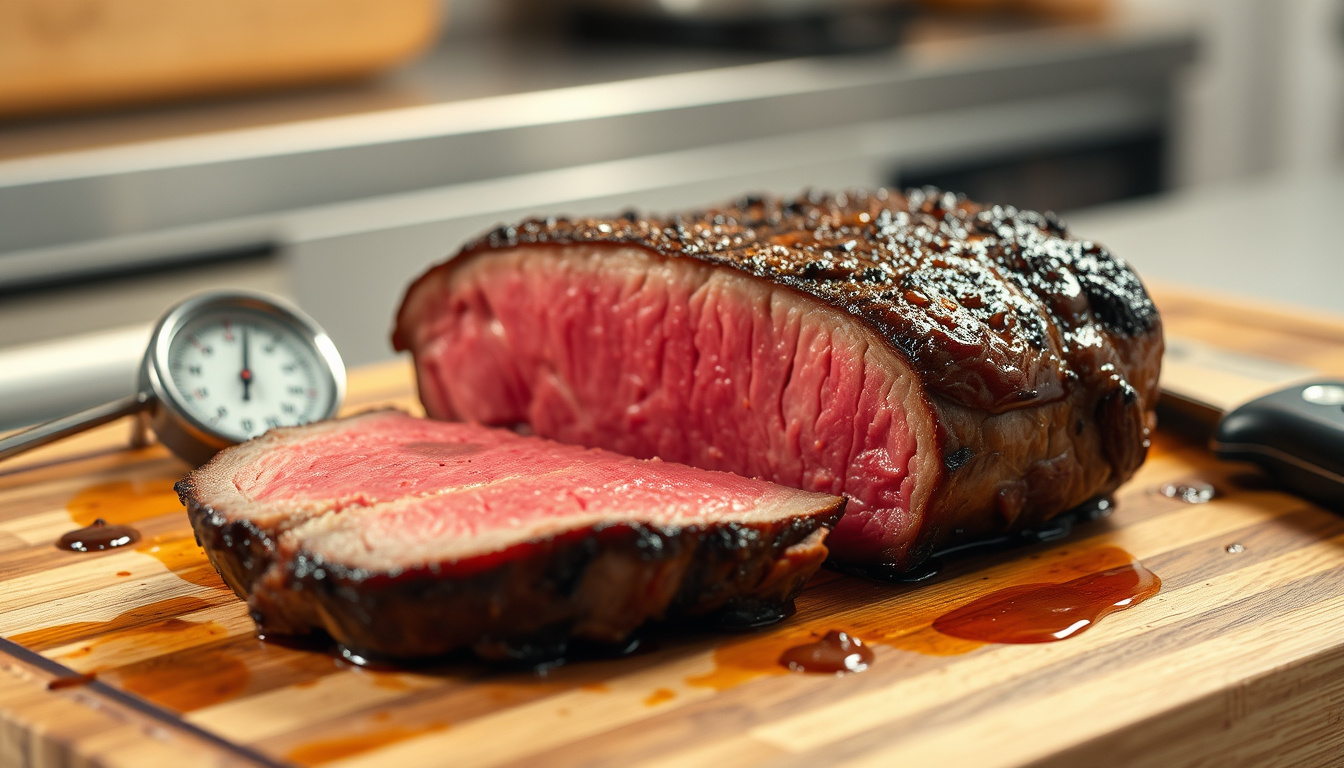
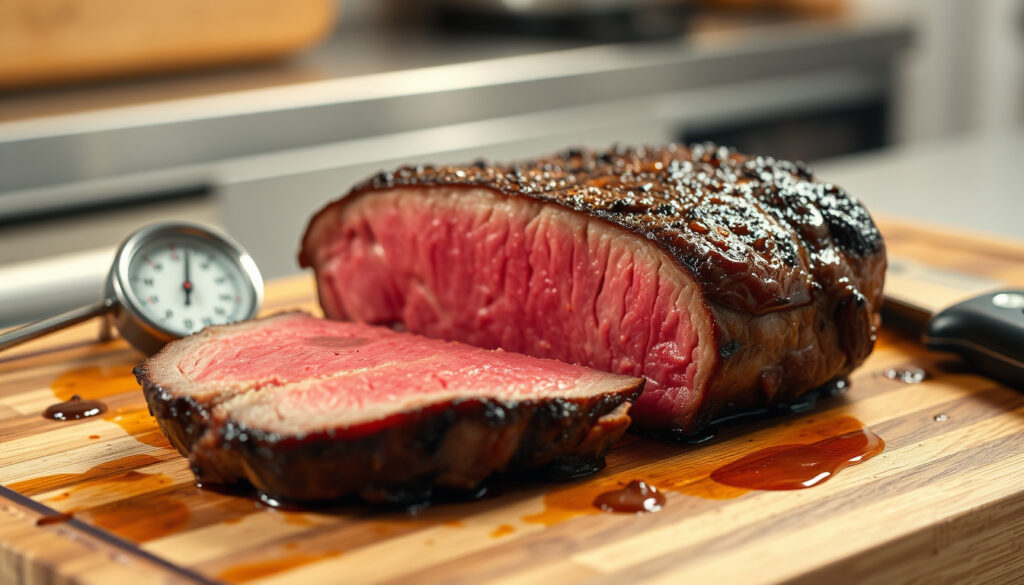
Cooking a medium rare steak is both a science and an art that rewards precision and attention to detail. Reaching the perfect internal temperature of 130-135°F (54-57°C) creates a balance of tenderness, juiciness, and flavor that many consider the ideal doneness level for premium beef cuts. Understanding the relationship between temperature, cooking time, and proper resting technique separates restaurant-quality results from ordinary outcomes.
The appeal of medium rare lies in how heat transforms beef at the cellular level. At these temperatures, the proteins begin to denature while the intramuscular fat renders into the meat, creating a buttery texture and rich beefy flavor that Well Done steaks simply cannot achieve. Whether using a gas grill, cast-iron pan, or smoker, the principles remain consistent: sear hard for the Maillard crust, monitor temperature precisely, and rest adequately before slicing.
This guide covers everything needed to consistently achieve the perfect medium rare steak, from understanding doneness temperatures and safety considerations to specific cooking times for different methods and cuts. The information draws from professional cooking sources and USDA guidelines to provide a comprehensive reference for home cooks and enthusiasts alike.
What Is the Ideal Internal Temperature for Medium Rare Steak?
The target internal temperature for a medium rare steak falls between 130-135°F (54-57°C), measured at the thickest part of the meat after resting. This temperature range produces a warm red center with pink edges, a seared brown crust from the Maillard crust, and a juicy, tender texture. Many professional chefs consider medium rare the sweet spot for showcasing premium beef’s flavor and texture.
Carryover cooking causes the steak’s internal temperature to rise an additional 5-15°F after removal from heat. For this reason, experienced cooks pull the steak from the heat at approximately 125°F, knowing the residual heat will bring it to the desired 130-135°F range during the resting period.
Slight variations exist across authoritative sources. Omaha Steaks, for instance, lists medium rare as 130-140°F, while other sources narrow it to 130-135°F. An instant-read digital thermometer remains the most reliable tool for achieving consistent results regardless of the specific range used.
Doneness Comparison: Finding the Right Level
Understanding how medium rare compares to other doneness levels helps clarify why this temperature range has become a preferred choice among chefs and steak enthusiasts. The progressive increase in internal temperature produces predictable changes in color, texture, and moisture content.
| Doneness Level | Final Internal Temp (°F) | Pull Temperature (°F) | Appearance |
|---|---|---|---|
| Rare | 120-125 | 115-120 | Cool red center, minimal sear |
| Medium Rare | 130-135 | 125 | Warm red/pink center, brown crust |
| Medium | 140-145 | 135-140 | Warm pink center |
| Medium Well | 150-155 | 145 | Light pink center, firmer texture |
| Well Done | 160+ | 150+ | Brown throughout, dry texture |
Key Insights for Perfect Medium Rare Results
- Always measure temperature at the thickest part of the steak, avoiding contact with bone if present
- Insert the thermometer horizontally from the side for the most accurate reading in thin steaks
- Fat renders optimally around 130°F, which explains why medium rare delivers superior flavor and juiciness
- Reverse searing works exceptionally well for thick cuts over 1.5 inches
- Preheat all cooking tools for 15-20 minutes before cooking to ensure consistent heat
- Pat steaks dry before seasoning to promote better browning and crust formation
- Rest steaks tented in foil for 5-10 minutes to allow juices to redistribute throughout the meat
Carryover cooking occurs when residual heat continues cooking the steak after removal from the heat source. A steak pulled at 125°F can rise 5-15°F during resting, making it essential to account for this rise when determining the pull temperature. Larger, thicker steaks experience more pronounced carryover effects than thinner cuts.
How Do You Cook the Perfect Medium Rare Steak?
Successful medium rare cooking begins before any heat is applied. Bringing steaks to room temperature for 20-30 minutes before cooking ensures more even cooking throughout the meat. Seasoning with salt, pepper, and optional aromatics should happen just before cooking to avoid drawing out moisture.
The foundation of great steak cooking lies in understanding how different heat sources interact with the meat. High direct heat develops the essential sear that creates flavor compounds through the Maillard reaction, while indirect or lower heat finishes cooking without burning the exterior.
Grill Method: High Heat Direct Searing
Grilling remains the most popular method for cooking steak, offering direct access to the intense heat necessary for a proper sear. A target grill temperature of approximately 450°F provides optimal conditions for creating the brown crust characteristic of medium rare steak. The grill grates leave characteristic marking patterns while the convection heat circulates for even cooking.
The Traeger 3-3-3 rule provides a useful framework for gas or pellet grill cooking: sear each side for 3 minutes at high heat, then continue cooking for an additional 3 minutes per side at lower heat. This approach works well for steaks between 1 and 1.5 inches thick.
Pan Searing: Controlled Surface Contact
Cast-iron skillets provide unmatched heat retention and even surface contact for steak searing. A screaming-hot pan, preheated for 15-20 minutes, creates the foundation for restaurant-quality crust development. The process involves adding a small amount of high smoke-point oil before placing the steak in the pan.
For steaks thicker than 1.5 inches, finishing in the oven becomes necessary after initial pan searing. Transferring to a preheated oven at 275-300°F allows the interior to cook through without overcooking the exterior. Basting with melted butter, garlic, and fresh herbs during the final minutes adds aromatic complexity.
Reverse Searing: The Professional’s Choice
Reverse searing has gained significant popularity among serious home cooks and professionals for its ability to produce remarkably uniform doneness throughout thick cuts. The technique begins with slow, gentle cooking in an oven or smoker at 225-250°F until the internal temperature reaches approximately 120°F.
After a 10-minute rest, the steak receives a quick sear on a screaming-hot grill or cast-iron pan for just 1-2 minutes per side. This final sear develops the crust while bringing the internal temperature to the target 130-135°F range. The result eliminates the typical gradient where edges become overcooked while the center reaches the desired doneness.
Skipping proper equipment preheating leads to inconsistent results. Whether using a grill, cast-iron skillet, or smoker, allow 15-20 minutes for the cooking surface to reach stable operating temperature. Placing a cold steak on an inadequately heated surface causes sticking, uneven browning, and unpredictable cooking times.
How Long Does It Take to Cook Medium Rare Steak?
Cooking times for medium rare steak depend critically on thickness, starting temperature, and heat source intensity. The following guidelines assume room-temperature steaks and properly preheated equipment. Times can vary significantly based on specific conditions, making temperature monitoring more reliable than time-based calculations.
Thickness represents the single most important variable affecting cooking duration. Thinner steaks cook faster per side but risk overcooking before the center reaches medium rare. Thicker steaks allow more control over the final doneness but require longer total cooking times or alternative methods like reverse searing.
Grill Cooking Times by Thickness
| Steak Thickness | First Side (minutes) | Second Side (minutes) | Total Time (approx.) |
|---|---|---|---|
| 1/2 inch | 3 | 2 | 5-6 minutes |
| 3/4 inch | 4 | 3 | 7-8 minutes |
| 1 inch | 5 | 4-5 | 9-11 minutes |
| 1.5 inches | 7 | 5-6 | 12-14 minutes |
| 2 inches | 9 | 7-8 | 16-18 minutes |
Pan and Oven Method Timing
Pan searing on a hot cast-iron skillet typically requires 3-5 minutes per side for a 1-inch-thick steak. After achieving a deep brown crust on both sides, transfer the steak to a preheated oven set at 350-400°F for approximately 5-10 additional minutes, monitoring closely with a thermometer.
The reverse sear method introduces the longest total cooking time but produces the most consistent results for thick cuts. A 2-inch ribeye cooked in a 225-250°F oven may require 45-90 minutes to reach 120°F internal temperature, followed by a brief but intense sear. While the timeline extends beyond traditional methods, active cooking time remains minimal.
Is Medium Rare Steak Safe to Eat and What Does It Look Like?
Medium rare steak at 130-135°F presents minimal food safety risk for high-quality beef from reputable sources. The USDA recommends a minimum internal temperature of 145°F (63°C) for all beef steaks after a 3-minute rest period as a safety standard applicable to all cooking scenarios and beef quality levels.
The key safety consideration involves surface bacteria that reside on the exterior of raw meat. A properly executed sear at temperatures exceeding 300°F effectively kills surface bacteria through thermal destruction. Since searing occurs on all exterior surfaces during cooking, medium rare steaks prepared with adequate heat treatment carry minimal additional risk compared to higher doneness levels.
Visual Characteristics of Medium Rare
A medium rare steak displays distinctive visual markers that identify its doneness level even without temperature measurement. The exterior shows a rich, caramelized brown crust approximately 1/8 to 1/4 inch thick. Cross-section examination reveals a warm red center that transitions to pinkish-red edges, with the overall color being significantly redder than medium or well-done alternatives.
The texture offers resistance without feeling firm, yielding slightly under pressure while retaining structural integrity. Juices pool on the cutting surface when sliced, appearing reddish-pink rather than clear. The fat marbling within the cut begins rendering at 130°F, contributing to a slightly glossy appearance in the cooked steak.
Cut-Specific Considerations
| Cut | Characteristics | Medium Rare Suitability |
|---|---|---|
| Ribeye | High marbling, rich fat cap, beefy flavor | Excellent choice; fat renders at 130°F for buttery texture |
| Filet Mignon | Lean, extremely tender, mild flavor | Ideal; stays juicy without fat rendering concerns |
| New York Strip | Moderate marbling, firm texture | Good choice; maintains tenderness at medium rare |
| Porterhouse/T-Bone | Two cuts, bone-in, complex flavor | Suitable; monitor both sections independently |
Higher quality cuts with superior marbling respond better to medium rare preparation because the intramuscular fat provides moisture and flavor that leaner cuts lack. Premium grade beef from established suppliers offers greater safety assurance and superior eating experience at this doneness level compared to lower-grade alternatives.
How Long Should You Rest Medium Rare Steak?
Resting time for medium rare steak should span 5-10 minutes, tented loosely under aluminum foil to retain warmth while allowing the meat to breathe. This period allows crucial physical and chemical changes that significantly impact the final eating quality. Skipping the rest causes juices to escape immediately upon cutting, resulting in a drier steak despite identical cooking.
During the resting period, muscle fibers that compressed during cooking gradually relax, allowing redistributed juices to settle throughout the meat rather than escaping when cut. The residual heat continues the cooking process, raising internal temperature an additional 5-15°F as previously discussed.
Step-by-Step Resting Process
- Remove steak from heat source when thermometer reads 125°F
- Transfer to a wire rack on a cutting board or plate
- Loosely tent with aluminum foil, avoiding tight wrapping
- Allow 5-10 minutes for juice redistribution
- Temperature should reach 130-135°F during rest
- Slice against the grain for optimal tenderness
Larger steaks benefit from resting at the longer end of the range. A 2-inch-thick ribeye may require the full 10 minutes, while a 1-inch steak might reach optimal results with 5-7 minutes. The steak has rested sufficiently when no additional temperature rise occurs over a 2-minute period.
Understanding Medium Rare vs Medium Doneness
The difference between medium rare and medium doneness extends beyond the 10-degree temperature gap. Medium rare achieves the ideal balance between protein denaturation and moisture retention, while medium represents the threshold where steak begins losing the characteristic qualities that make beef desirable.
At 140°F and above, myoglobin in the meat transitions to the metmyoglobin form, creating the grayish-brown tones associated with Well Done meat. The change in color directly correlates with protein and moisture changes that affect texture and flavor. For this reason, many steak connoisseurs consider medium the final acceptable doneness for quality beef.
Different dining contexts may favor different doneness levels. A thick-cut ribeye with abundant marbling may be best appreciated at medium rare, where the fat renders optimally and the beefy flavor reaches its peak. A leaner cut might benefit from cooking slightly longer to improve texture, though medium rare remains achievable with proper technique.
Established Facts and Areas of Uncertainty
The fundamentals of medium rare steak cooking rest on well-documented culinary science and established professional practices. These core principles provide reliable guidance for achieving consistent results across various cooking scenarios and equipment configurations.
| Established Information | Variables and Uncertainties |
|---|---|
| Medium rare target: 130-135°F final internal temperature | Carryover magnitude varies by cut, thickness, and starting temperature (typically 5-15°F rise) |
| Pull temperature should be 5-10°F below target | Optimal resting duration may vary by individual preference and steak size |
| USDA recommends 145°F minimum for safety | Risk assessment differs based on beef source quality and handling history |
| Searing kills surface bacteria effectively | Specific time-temperature combinations for optimal searing vary by equipment |
Carryover cooking estimates within the 5-15°F range represent typical values, but individual results may fall outside this window based on specific variables. Thickness, initial temperature, ambient conditions, and steak density all influence the actual carryover magnitude experienced during cooking.
Professional Guidance and Expert Recommendations
The single most important tool for consistent steak cooking is an accurate instant-read digital thermometer. Temperature monitoring eliminates guesswork and ensures predictable results regardless of variations in equipment, starting temperature, or personal interpretation of doneness levels.
— Based on guidance from professional cooking sources including ThermoWorks and culinary schools
Professional steakhouse techniques consistently emphasize the importance of bringing meat to room temperature before cooking, preheating equipment adequately, and using thermometers rather than time estimates. These practices minimize variability and maximize the likelihood of achieving the desired medium rare doneness consistently.
For premium cuts like ribeye, medium rare represents the temperature at which fat rendering peaks, delivering the buttery texture and rich flavor that distinguish these expensive cuts from leaner alternatives. The Maillard reaction during searing creates hundreds of flavor compounds that complement the natural beef flavor.
— Based on recommendations from Omaha Steaks and Ruth’s Chris Steak House culinary guidance
Summary and Next Steps
Achieving the perfect medium rare steak requires understanding the relationship between internal temperature, cooking method, and proper resting technique. The target temperature of 130-135°F creates the ideal balance of tenderness, juiciness, and flavor that defines exceptional steak eating experiences. Whether using a grill, cast-iron pan, or oven finishing method, the principles remain consistent: monitor temperature precisely, preheat equipment adequately, and rest before slicing.
For those looking to explore complementary culinary interests, the fundamentals of controlled heat application and temperature monitoring apply broadly across cooking disciplines. Understanding medium rare steak preparation builds foundational skills that transfer to other premium protein cookery.
Equip yourself with a quality digital thermometer, select a well-marbled cut like ribeye, and apply these techniques to consistently achieve restaurant-quality medium rare steak at home.
Frequently Asked Questions
What temperature is medium rare steak?
Medium rare steak reaches an internal temperature of 130-135°F (54-57°C) when measured at the thickest part after resting. Pull the steak from heat at approximately 125°F to account for carryover cooking during the resting period.
How long to grill a 1-inch steak medium rare?
A 1-inch-thick steak on a preheated grill at approximately 450°F requires about 5 minutes per side. This produces a medium rare doneness level when combined with a 5-10 minute resting period afterward.
Is medium rare steak safe to eat?
Medium rare steak at 130-135°F poses minimal food safety risk for high-quality beef when the exterior has been properly seared. Surface bacteria are destroyed during high-heat searing, though the USDA recommends 145°F as a safety standard.
What does medium rare steak look like inside?
A medium rare steak displays a warm red center with pinkish-red edges, surrounded by a caramelized brown crust approximately 1/8 to 1/4 inch thick. The overall appearance is significantly redder than medium or Well Done steaks.
How long should you rest a medium rare steak?
Medium rare steak should rest for 5-10 minutes, tented loosely under aluminum foil. This allows juices to redistribute throughout the meat, and the temperature continues rising 5-15°F during the resting period.
What is the reverse sear method?
Reverse searing involves cooking the steak slowly in an oven or smoker at 225-250°F until reaching 120°F internal temperature, resting briefly, then searing for 1-2 minutes per side on very high heat. This method works exceptionally well for thick cuts over 1.5 inches.
Which steak cuts are best for medium rare?
Ribeye excels at medium rare due to its generous marbling that renders buttery at 130°F. Filet mignon also suits medium rare preparation, maintaining juiciness despite being leaner. Both cuts deliver superior texture and flavor at this doneness level.
Can you cook medium rare in a cast-iron pan?
Cast-iron pans provide excellent results for medium rare steak when preheated for 15-20 minutes until screaming hot. Sear 3-5 minutes per side for a 1-inch steak, then finish in a 275-300°F oven if the cut is thicker than 1.5 inches.
Related stories




Liam O'Brien covers Australian politics and public affairs for Australia Voice.