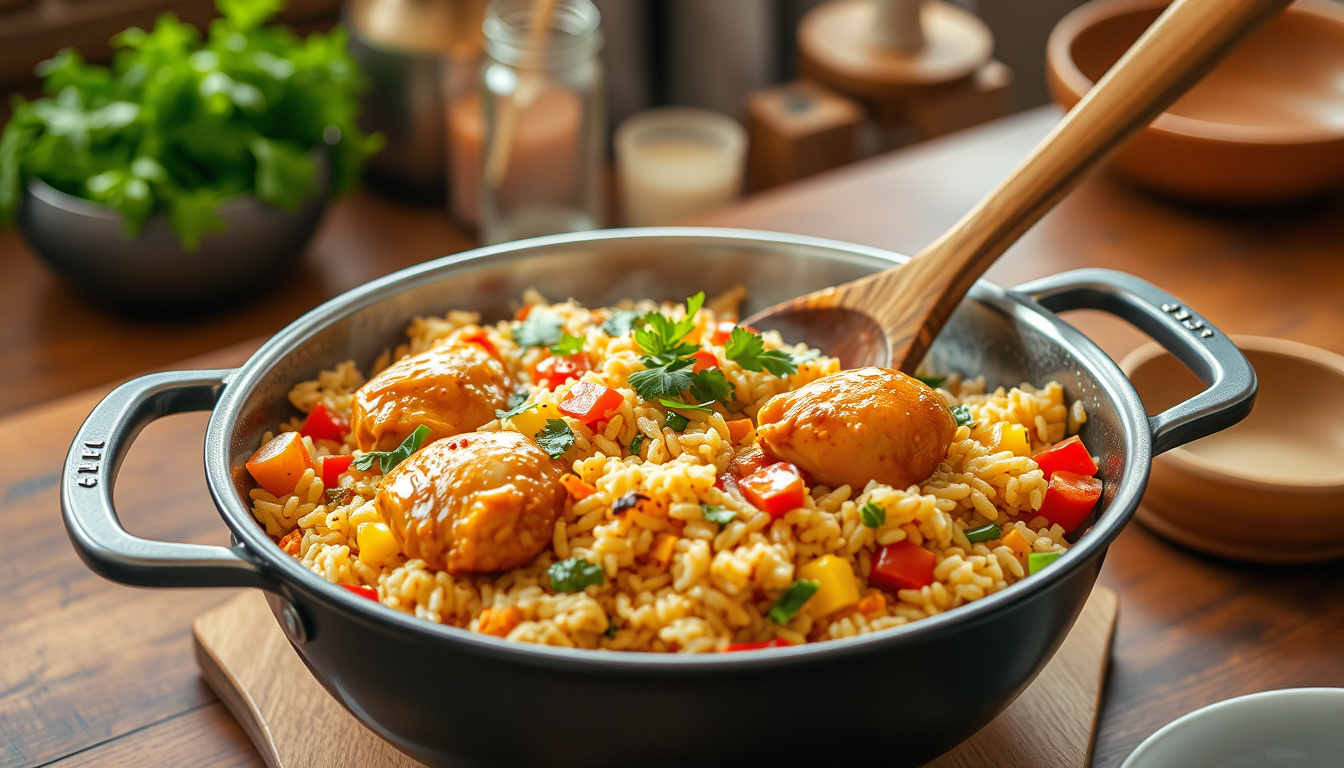
Chicken and rice recipes rank among the most beloved comfort foods across cultures, offering a versatile foundation that adapts to countless flavor profiles and cooking styles. From a simple one-pot weeknight dinner to elaborate international variations, this combination delivers lean protein, complex carbohydrates, and vegetables in a single vessel.
The appeal extends beyond convenience. These dishes typically require 30-45 minutes of total preparation and cooking time, using basic ingredients like chicken thighs or breasts, long-grain rice, aromatics, and seasoning. Whether prepared in a Dutch oven, stock pot, skillet, rice cooker, or Instant Pot, the single-pot approach minimizes cleanup while maximizing flavor integration.
How to Make Easy One-Pot Chicken and Rice
The classic one-pot method forms the foundation for most chicken and rice recipes, regardless of the final flavor direction. The technique relies on layering ingredients that release moisture and flavor as they cook together.
Overview of Preparation Styles
Prep: 10min | Cook: 40min
Calories: 450 per serving
Stir-fry method | 30min total
Calories: 380 per serving
Low-carb adaptation | 50min
Calories: 350 per serving
Pressure cook | 20min total
Calories: 420 per serving
Key Preparation Tips
- Boneless, skinless chicken thighs yield juicier results than breasts due to higher fat content
- Searing chicken in the pot before adding rice develops deeper flavor through the Maillard reaction
- Using chicken broth instead of water adds savory depth to the finished dish
- Rinsing rice removes excess starch and prevents clumping during cooking
- Customization options include vegetable additions, seasoning swaps, and cheese fold-ins
- Leftovers keep for up to four days refrigerated in airtight containers
- Testing rice doneness early prevents mushy texture, especially with different rice varieties
Nutritional Breakdown by Style
| Variation | Prep Time | Calories | Protein (g) |
|---|---|---|---|
| One-Pot Classic | 10min | 450 | 30 |
| Fried Style | 15min | 380 | 25 |
| Baked Casserole | 15min | 350 | 28 |
| Instant Pot | 5min | 420 | 32 |
| Teriyaki Glaze | 12min | 410 | 29 |
| Greek Lemon-Herb | 10min | 390 | 31 |
Healthy Chicken and Rice Recipes for Weight Loss
When prepared with attention to ingredients and portions, chicken and rice dishes can support weight management goals effectively. The combination provides approximately 30-40 grams of protein per serving, which promotes satiety and helps maintain lean muscle during caloric restriction.
Calorie Management Strategies
Reducing caloric density while maintaining satisfaction requires strategic ingredient choices. Substituting brown rice for white rice increases fiber content, slowing digestion and extending feelings of fullness. Using skinless chicken breast instead of thighs lowers fat content while preserving protein levels.
Skipping added butter and using broth-based cooking methods can subtract 50-100 calories per serving without significantly affecting flavor or texture.
Low-sodium chicken broth allows sodium control while maintaining savory depth. Adding non-starchy vegetables like broccoli, spinach, or bell peppers increases volume and micronutrient density without proportional calorie increases. Frozen vegetable blends offer convenience and year-round availability.
Protein and Fiber Balance
Each serving of the basic recipe provides roughly 400-600 calories depending on specific ingredients and portion sizes. A typical serving contains approximately 25-35 grams of protein from chicken, 45-50 grams of carbohydrates from rice, and 10-15 grams of fat from cooking oils or butter.
The protein-to-calorie ratio of roughly 1 gram of protein per 12-15 calories makes this combination efficient for muscle preservation during weight loss. Adding fiber through vegetables or brown rice improves digestive health and further supports appetite management.
Chicken Fried Rice and Other Flavor Variations
Beyond the classic one-pot preparation, chicken and rice adapts to numerous culinary traditions and flavor profiles. These variations range from quick weeknight adaptations to more elaborate preparations suited for special occasions.
Regional and International Styles
Greek lemon-herb chicken and rice brings bright, tangy flavors through lemon zest, lemon juice, and oregano. The dish often finishes with crumbled feta cheese and bakes covered at 375°F for approximately 30 minutes.
Cajun chicken and rice delivers bold, spicy notes through Cajun seasoning, bell peppers, and onions. The chicken typically sears first to develop a flavorful crust before combining with rice and seasonings.
Teriyaki chicken and rice features a sweet-savory glaze achieved through soy sauce, ginger, and honey. Some preparations incorporate pineapple chunks for acidity that balances the sweetness.
The choice between spice blends, acid additions, and savory sauces determines the cultural origin of the dish. These adaptations retain the core technique while transforming the flavor profile entirely.
Fried Rice Technique
Fried chicken and rice requires a different approach than steaming methods. The chicken sears skin-side down first to achieve crispy edges, then rice and broth combine with an uncovered finish that allows moisture to evaporate and creates textural contrast.
Chicken and Rice Cooking Methods: Rice Cooker, Instant Pot, and Oven
Modern kitchen appliances offer alternative approaches to the traditional stovetop method, each with distinct advantages for specific lifestyles and time constraints. Understanding these variations helps home cooks choose the most appropriate technique for their situation.
Rice Cooker Preparation
The rice cooker provides a set-it-and-forget-it approach ideal for busy schedules. All ingredients combine directly in the cooker with a 1:2 ratio of rice to broth. The appliance automatically switches to a warm setting when liquid absorbs, typically within 20-30 minutes.
Results tend toward softer, more uniform texture compared to stovetop methods. The sealed environment prevents evaporation, so adjusting liquid quantities slightly downward improves final consistency.
Instant Pot Pressure Cooking
Electric pressure cookers like the Instant Pot reduce total cooking time significantly through high-pressure environment that raises boiling point. The sauté function browns chicken and aromatics first, then pressure cooking at high setting takes approximately 8 minutes followed by natural release for 10 minutes.
Pressure cooking requires understanding of natural versus quick release methods. Natural release allows residual pressure to dissipate gradually, preventing food eruption when the valve opens.
Total active time with the Instant Pot is approximately 5 minutes, though overall process takes 20-25 minutes including pressure buildup and release. This method suits meal preparation where hands-off cooking is preferred.
Oven-Baked Casserole Method
Baking in a covered Dutch oven or casserole dish provides even heating and hands-off monitoring once assembled. Ingredients layer in the vessel, cover with lid, and bake at 350-375°F for 30-40 minutes until rice absorbs liquid completely.
This method works well for make-ahead meals assembled earlier in the day and baked when ready to serve. The enclosed environment creates steam that cooks both chicken and rice simultaneously.
Step-by-Step Cooking Timeline
Understanding the sequence of operations helps coordinate timing and ensures each component reaches proper doneness. The following timeline reflects standard one-pot preparation.
- Gather and measure all ingredients before beginning (2-3 minutes)
- Sauté diced onions, garlic, and carrots in butter or olive oil over medium heat (3-4 minutes)
- Season and add chicken pieces, cooking until lightly browned (4-5 minutes)
- Add rinsed rice and stir to coat in the fat and aromatics (1-2 minutes)
- Pour in chicken broth or water, bring to boil (3-4 minutes)
- Reduce heat, cover, and simmer until rice is al dente and chicken reaches 165°F internal temperature (15-20 minutes)
- Remove from heat, rest covered for 5-10 minutes to complete cooking through steam
- Fluff with fork, optionally stir in butter or cheese, and serve immediately
What Scientists and Nutritionists Confirm About Chicken and Rice
The fundamental technique of combining chicken and rice in one vessel has been validated across numerous food science resources and nutritional databases. Calorie and macronutrient estimates derive from standard ingredient databases and reflect typical preparation methods.
Established nutritional facts include protein content of boneless, skinless chicken thighs at approximately 26 grams per 100 grams raw, and long-grain white rice providing roughly 130 calories and 28 grams carbohydrates per cup cooked. These values can vary based on specific products and preparation methods.
Calorie and macronutrient information in this guide comes from standard nutritional databases and published recipe analyses. Individual results vary based on specific brands, cuts, and preparation techniques used.
Established Versus Variable Information
| Established Facts | Variable Factors |
|---|---|
| Chicken must reach 165°F for food safety | Exact calories depend on specific ingredient brands |
| Rice liquid ratio affects final texture | Cooking times vary by appliance and altitude |
| Boneless thighs yield juicier results than breasts | Seasoning quantities depend on personal preference |
| Resting improves final texture | Vegetable additions vary by recipe |
Why Chicken and Rice Remains a Global Favorite
Chicken and rice appears across numerous culinary traditions under various names and preparations. Spanish arroz con pollo, Caribbean jerk chicken with rice and peas, and Asian clay pot rice all share the fundamental technique of combining protein and starch in a single vessel.
The appeal stems from several factors. Both ingredients are relatively affordable and widely available. The neutral flavor base accepts diverse seasonings and cultural adaptations. The complete protein combination provides essential amino acids when rice and chicken are consumed together. Finally, the one-dish format simplifies meal planning and reduces kitchen equipment requirements.
Customization options further expand the appeal. Vegetarian versions substitute tofu or additional vegetables for chicken. Gluten-free preparation requires no ingredient modifications since standard chicken and rice naturally contains no gluten. The dish accommodates numerous dietary restrictions without fundamental recipe changes.
Sources and Expert References
This guide draws upon recipe development practices and nutritional analyses from multiple food bloggers and cooking publications specializing in accessible weeknight meals. Information about ingredient ratios and cooking techniques reflects consensus across these sources.
“One-pot chicken and rice recipes are simple, healthy meals using chicken thighs or breasts, rice, vegetables, and basic seasonings, cooked entirely in a single pot like a Dutch oven, stock pot, or skillet for minimal cleanup.”
Nutritional data references standard food composition databases used by dietitians and food scientists for macronutrient calculation. Temperature guidelines for chicken doneness follow current food safety recommendations from public health authorities.
Summary and Next Steps
Chicken and rice recipes offer an adaptable foundation for nutritious meals suited to various dietary needs and time constraints. The core technique transfers across cooking methods, from stovetop to rice cooker to pressure cooker, with minor adjustments for each appliance.
Those interested in expanding their repertoire might explore related protein combinations like beef and rice preparations or learn about proper temperature management for optimal protein cooking.
Frequently Asked Questions
What sides go with chicken and rice?
Low-calorie options include steamed broccoli, asparagus, green beans, or a simple cucumber-tomato salad. These add fiber and micronutrients with minimal caloric impact.
Is chicken and rice good for weight loss?
Yes, when prepared with attention to portions and ingredients. The high protein content supports satiety, and the fiber from vegetables or brown rice aids digestion.
How long does chicken and rice last in the refrigerator?
Properly stored in airtight containers, chicken and rice leftovers remain safe for consumption for up to four days.
Can I use brown rice instead of white rice?
Brown rice works but requires longer cooking times and additional liquid since it contains bran layers that absorb moisture more slowly.
What is the internal temperature chicken must reach?
Chicken should reach an internal temperature of 165°F as measured with a food thermometer inserted into the thickest part of the meat.
Can chicken and rice be frozen for later?
Yes, though texture may change slightly upon thawing. Store in airtight freezer containers for up to three months and reheat thoroughly before serving.
What rice type works best for one-pot recipes?
Long-grain white rice varieties like basmati or jasmine work well because they release less starch and maintain distinct grains during cooking.
Related stories





Liam O'Brien covers Australian politics and public affairs for Australia Voice.